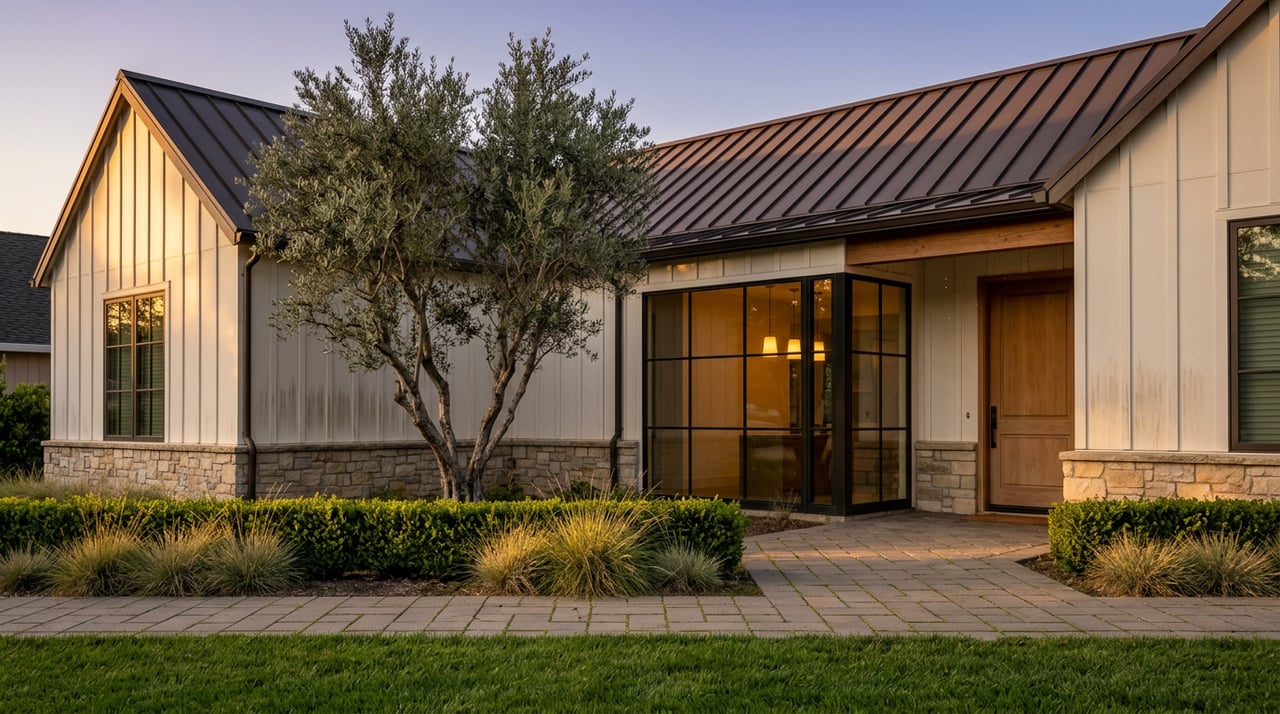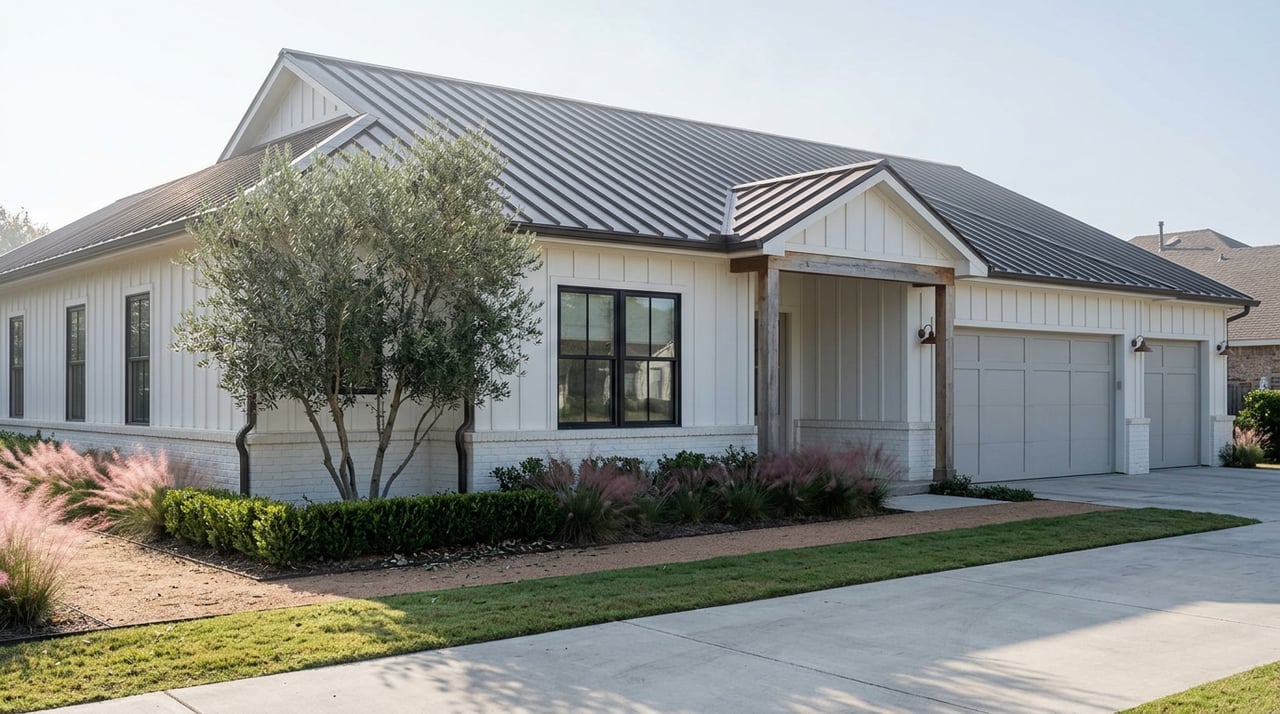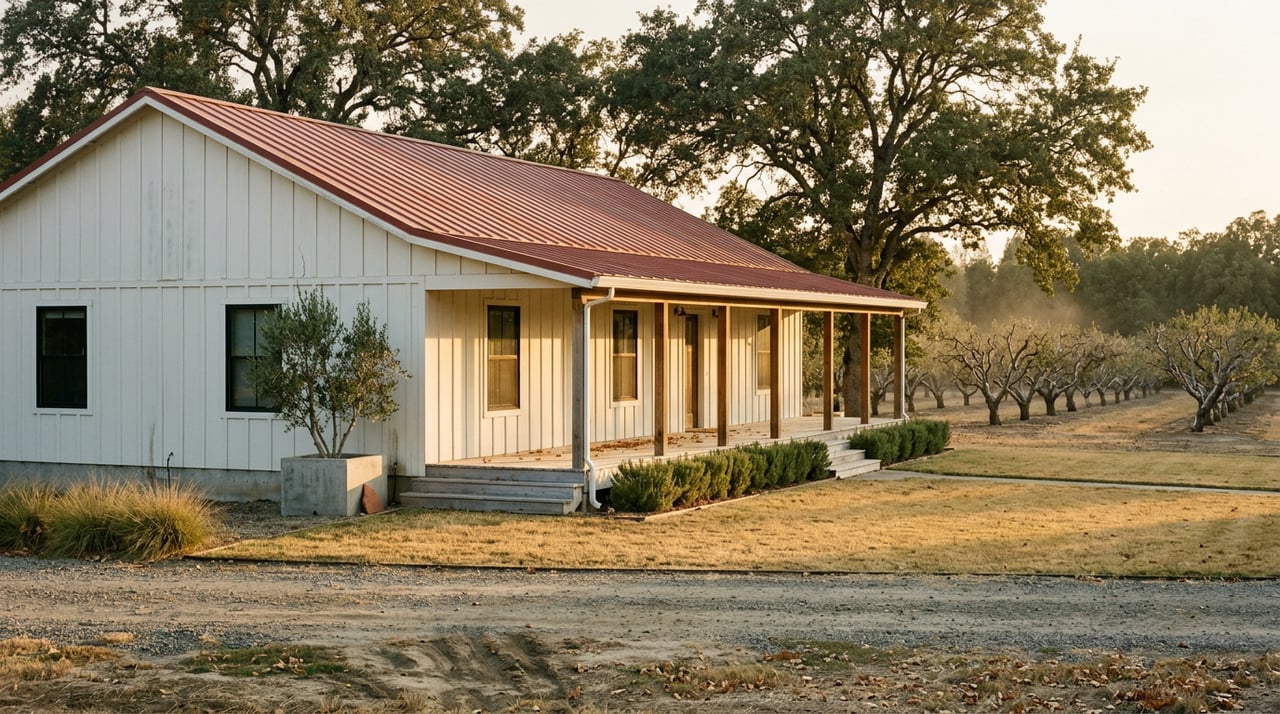
Two ranch-style parcels came up within a few weeks of each other this year, both in Stanislaus County, both priced within a few thousand dollars of each other, both with a well, a barn, and irrigated acreage. On paper they looked like the same purchase. They were not. One sits in a subbasin where the Groundwater Sustainability Agency just finished a multi-year fight with the state over its management plan. The other sits in a subbasin the state signed off on back in 2019 and hasn't had to revisit since. Nothing on the listing sheet told either buyer which one they were looking at.
That gap between what a listing shows and what a parcel is actually exposed to is the thing worth understanding before you write an offer on rural, agricultural, or ranch-style property anywhere in this county. The county's median price tells you what a typical transaction costs. It says nothing about which of four separately governed groundwater subbasins your specific property draws from, and in 2026 that distinction has started to carry real dollar consequences.
Stanislaus County Doesn't Have One Water Story, It Has Four
Under California's Sustainable Groundwater Management Act, the county is split across four subbasins, each with its own governing agency, its own state review history, and now its own timeline for pumping restrictions and fees.
| Subbasin | Who manages it | Where it stands in 2026 |
|---|---|---|
| Eastern San Joaquin | County-adopted Groundwater Sustainability Plan | Approved by the Board of Supervisors in December 2019, the most settled of the four |
| Delta-Mendota | Northern Delta-Mendota GSA Group | Classified as critically overdrafted, required to submit a plan by January 2020, now running a shared well mitigation program |
| Modesto | Stanislaus and Tuolumne Rivers Groundwater Basin Association (STRGBA), whose members include the Cities of Modesto, Oakdale, Riverbank, and Waterford, the County, and the Modesto and Oakdale Irrigation Districts | Plan rejected as incomplete by the state in January 2024, revised, and its new Groundwater Use Management Program approved by the Board of Supervisors on April 12, 2026 |
| Turlock | Two separate agencies, the West Turlock Subbasin GSA and the East Turlock Subbasin GSA | Plan also rejected as incomplete in January 2024; the East Turlock agency rolled out the subbasin's first groundwater use fee in 2025 |
Four subbasins, four different clocks. A buyer comparing acreage in the northern part of the county to acreage near Turlock isn't comparing two versions of the same market. They're comparing two different regulatory environments that happen to share a county line.
The Modesto Subbasin's Clock Just Started Ticking
The Modesto Subbasin covers the ground under and around the county's largest city, and its path to this point has not been smooth. The state reviewed the subbasin's original plan and rejected it in January 2024, finding it fell short of what the law requires. STRGBA revised the plan and resubmitted it, and on April 12, 2026, the Board of Supervisors unanimously approved a new Groundwater Use Management Program built around an allocation framework and a strategy to protect vulnerable wells.
That program is not symbolic. Reductions in groundwater use are scheduled to begin no later than January 31, 2027, and from there they ramp up in five-year increments as the subbasin works toward the sustainability targets in its plan. If you're evaluating a property that draws from this subbasin, the pumping allowance attached to that well is not fixed. It's on a schedule.
There's a second layer buyers often miss. STRGBA's member list includes the Cities of Modesto, Oakdale, Riverbank, and Waterford, but those cities are not equally exposed. Modesto is the only city in the group that receives meaningful surface water, purchasing treated water from the Modesto Irrigation District to supplement its groundwater. Oakdale, Riverbank, and Waterford rely on groundwater alone for their municipal supply. A property inside Modesto city limits has a fallback that a similar property in unincorporated land near Oakdale or Riverbank does not.
Turlock's Bill Already Arrived
If Modesto's story is about a schedule that's just starting, Turlock's is about a bill that already showed up in mailboxes. The Turlock Subbasin's plan went through the same rejection and revision cycle as Modesto's, deemed incomplete by the state in January 2024. While that revision was underway, the East Turlock Subbasin GSA moved forward with a Proposition 218 groundwater use fee, the funding mechanism it needs to pay for the wells, recharge projects, and fallowing programs required to bring the subbasin into compliance.
Notices went to landowners in February 2025. A protest hearing was held April 8, 2025, and absent a majority objection from affected parcel owners, the agency's board could adopt the fee at its April 27, 2025 meeting. Deposit invoices for the new charge went out that summer. This is a use-based fee tied to actual groundwater pumped, on top of whatever a landowner already pays their water district or spends maintaining a well.
The fee exists specifically because local governance is trying to stay ahead of a worse outcome. If a subbasin's agency can't develop or implement an adequate plan, the state can step in directly, and when it does, the standard toolkit includes flat per-well charges plus a per-acre-foot pumping fee, a version of exactly the kind of state intervention that's already playing out in other San Joaquin Valley subbasins further south. Local control comes with a cost. State control costs more and comes with less say in how the money gets spent.
The Subbasin Already Living With the Consequences
The Delta-Mendota Subbasin got here first because it had to. Classified as critically overdrafted, it was required to have a Groundwater Sustainability Plan in place by January 2020, years ahead of Modesto and Turlock's deadlines. Stanislaus County participates in this subbasin as part of the Northern Delta-Mendota GSA Group, which now runs a shared well mitigation program. The county's share of that program's operating cost is projected at roughly $5,065 a year for fiscal years 2026 through 2028, a modest but real ongoing obligation tied directly to keeping rural wells functioning.
It's worth putting the actual risk in proportion. Over the past decade, across nearly 1,200 square miles of the Stanislaus County portion of this subbasin, fewer than 40 wells have been reported dry or submitted for replacement. That's not a subbasin in crisis. It's a subbasin that got its paperwork in order early and is now managing a real but contained problem, which is the outcome the other two subbasins are still working toward.
What the County Median Doesn't Show You
None of this shows up in the number most buyers start with. As of November 2025, the median home sale price across Stanislaus County sat at $460,000, down slightly from a year earlier, with homes taking closer to 39 days to sell compared to 28 days the year before. Listing prices, tracked separately, ran higher, with the median asking price at $524,900 as of May 2026 according to Federal Reserve data. Those figures describe the county in aggregate. They say nothing about whether a specific parcel sits in a subbasin with a fee already in place, a schedule of pumping cuts about to start, or a plan the state signed off on years ago and hasn't touched since.
For a buyer purchasing a single-family home on a city water connection, the distinction may never matter much. For anyone looking at ranch land, acreage with an agricultural well, or rural residential property outside a city's water service area, it's one of the first questions worth asking, right alongside square footage and lot lines.
Questions Worth Asking Before You Offer
- Which of the four subbasins does this parcel sit in, and is the property inside a city's water service area or dependent on a private well?
- If it's on a private well, has that GSA's plan been approved by the state, or is it still in a revision cycle?
- Is there an existing or proposed groundwater use fee attached to this property, and who administers it?
- If the property is in the Modesto Subbasin, what allocation applies once the new use management program's reduction schedule takes effect?
- Does the parcel have any documented well interference or drawdown history on file with the county?
A Few Common Questions
Does this affect a regular home on city water in Modesto or Turlock? Less directly. City water customers are generally insulated from subbasin-level pumping schedules, though the cost of complying with these plans can work its way into local water rates over time.
Is any part of Stanislaus County actually running out of water? No subbasin here has been declared critically overdrafted except Delta-Mendota, and even there the documented rate of dry or replaced wells over the past decade is low. The bigger issue for buyers is cost and certainty, not an immediate shortage.
Can I find out which subbasin a specific parcel is in before I make an offer? Yes. Stanislaus County's Department of Environmental Resources maintains subbasin boundary information, and it's a reasonable question to raise during due diligence on any rural or agricultural purchase.
Water rules in the Central Valley are drawn by subbasin, not by county line, and the difference between one and another is exactly the kind of detail that's easy to miss from a listing photo. If you're comparing rural, ranch, or agricultural property anywhere in Stanislaus County and want a clear read on what a specific parcel is actually exposed to, Amy Thomas has spent 21 years working these markets and can help you ask the right questions before you're in escrow. Let's Connect.