"All persons purchasing lots within the boundaries of this approved map should be prepared to accept the inconveniences or discomforts associated with agricultural operations or activities, such as noise, odors, insects, dust or fumes."
That sentence is not a warning label a seller invented to cover themselves. It is boilerplate that San Joaquin County requires on the recorded map of any subdivision built on or next to agricultural land. If you buy a home in one of Ripon's newer developments, there is a real chance that language already exists on paper somewhere tied to your parcel, filed years before you ever toured a model home.
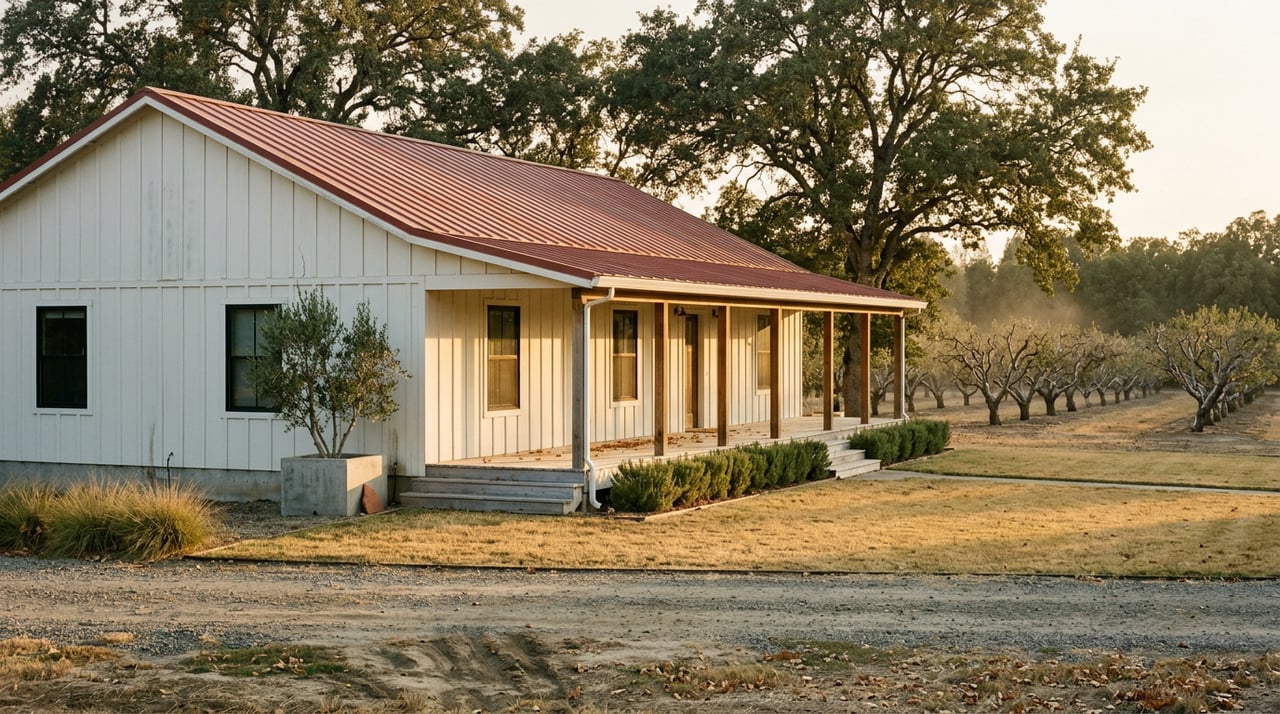
Ripon sells itself on almond orchards. The Almond Blossom Festival draws people downtown every February, and builders lean on that identity hard: Lennar's Meadowood community, going up on West Colony Road and Fulton Avenue behind the Save Mart shopping center, markets itself around orchard-lined roads and small-town charm. The orchards are the selling point. They are also the reason a legal disclosure shows up in your escrow packet that has nothing to do with the house itself.
The Disclosure Isn't About Your View. It's About a Map.
Here's the part that catches relocating buyers off guard: California's right-to-farm disclosure law doesn't care whether you can see an orchard from your kitchen window. Since 2009, state law under Civil Code section 1103.4 has required sellers and agents to disclose whether a property sits within one mile of land shown on the state's Important Farmland Map, a designation that covers Prime Farmland, Farmland of Statewide Importance, Unique Farmland, Farmland of Local Importance, and Grazing Land. A one-mile radius in a town built around almond production reaches a lot further than the last row of trees at the edge of a subdivision.
That means a buyer touring a home two or three streets back from any working orchard, with no farmland visible from the property at all, can still receive the same notice as someone buying the last lot on the block that actually borders the trees. The disclosure is triggered by proximity on a map, not by what you can see from the porch.
San Joaquin County layers its own ordinance on top of the state requirement. When the county approves a subdivision map for land on or adjacent to agricultural property, it requires the right-to-farm language recorded permanently with that map. The county also mails a right-to-farm notice to every property owner in San Joaquin County with the annual secured tax bill, not just at the point of sale. If you missed it in escrow, it finds you again every year afterward.
What You're Actually Agreeing To Accept
The language is specific for a reason. California's broader right-to-farm law bars nuisance lawsuits against agricultural operations that have run for more than three years without complaint, even if a housing development shows up next door afterward. The policy goal is straightforward: protect long-standing farms from new neighbors who move in and then try to sue the farm out of existence over noise or dust that was there first.
In practice, this is what the disclosure covers:
- Noise and machinery operation at any hour, including aircraft used for aerial spraying
- Dust, odors, and fumes from normal agricultural activity
- Application of fertilizers, pesticides, and soil amendments
- Insects, smoke, and truck traffic tied to harvest and processing
None of this means the property has a defect. It means the county and state want you to know, in writing, that farming near your home is legal, expected, and protected from complaint before you sign anything.
Where This Actually Shows Up in a Ripon Transaction
| Layer | What it requires | When you see it |
|---|---|---|
| State law (Civil Code 1103.4) | Disclosure if the property sits within one mile of mapped farmland | At the point of sale, in transfer disclosure paperwork |
| County ordinance | Right-to-farm language recorded on the subdivision map itself | Baked into the parcel's public record before you ever tour it |
| County tax notice | A right-to-farm reminder mailed with the annual property tax bill | Every year, for as long as you own the property |
The state layer is what most buyers expect, if they expect anything at all. The county layer is the one that surprises people, because it means the disclosure isn't really a seller's choice. It was attached to the land before the house was built.
The Market Gives You Room to Ask Early
This matters more right now than it would have two years ago. As of August 2026, homes in Ripon are spending a median of 52 days on the market, roughly the same pace as August 2025, while price per square foot has slipped 4 percent year over year. That is not a market where sellers or builders can afford to stall a buyer's questions. A softer market means you have room to ask for the right-to-farm disclosure and the recorded subdivision map language before you're deep into your inspection period, not after.
For a home in an established, fully built-out block, this is a quick confirmation and nothing more. For new construction in a development still expanding toward active farmland, like Meadowood or the smaller acreage parcels marketed along Murphy Road, it's worth understanding exactly which direction the working orchards sit relative to your specific lot, and whether that adjacency is temporary or permanent under the county's general plan.
Questions Worth Asking Before You Write an Offer
- Is the property within one mile of land shown on the state's Important Farmland Map, and has that disclosure already been provided in writing?
- Does the subdivision's recorded map include right-to-farm language, and can you get a copy before removing contingencies?
- Which direction do the nearest active agricultural operations sit, and how long have they been operating at that location?
- If aerial spraying is used nearby, what time of year and how often does it typically occur?
None of these questions should scare a buyer away from Ripon. They should just move up the timeline, from something you discover in a stack of escrow paperwork to something you confirm before you're financially committed.
A Few Common Questions
Does a right-to-farm disclosure mean something is wrong with the property? No. It means the property is near land the state or county has classified as agricultural, and that nearby farming activity is legally protected from nuisance complaints. It's a notice about the neighborhood, not a defect in the home.
Can I still get financing on a home with this disclosure? Yes. Right-to-farm disclosures are standard across agricultural regions of California and do not affect loan eligibility on their own. Lenders are far more concerned with the condition of the structure itself.
Does this disclosure expire once the orchard is gone? Not automatically. The recorded language stays with the subdivision map. If the surrounding land use changes, that's a separate zoning and general plan question, one worth asking the county planning department directly if it matters to your decision.
Ripon's orchards are part of what makes the town worth moving to, not a reason to second-guess it. The goal here isn't caution for its own sake. It's making sure the paperwork you sign matches what you actually understood when you toured the home, so nothing in escrow feels like a surprise. If you're weighing a purchase in Ripon or anywhere else in the Central Valley and want a clear read on what a specific property's disclosures actually mean for you, Amy Thomas is glad to walk through it with you. Let's Connect.